Home › Parking Lot Repair & Replacement
Precision Asphalt Indianapolis performs parking lot repair in Indianapolis, IN to keep commercial pavements safe and professional. We fix potholes, cracked sections, drainage problems, and failing areas with patching or partial reconstruction. When a lot has reached the end of its life, we provide complete tear out and replacement with new asphalt. Maintain a positive first impression and reduce liability with a sound parking surface.
Precision Asphalt Indianapolis provides professional parking lot repair throughout Indianapolis, IN, Indiana and the surrounding area. Our licensed, insured crew delivers safe, clean, on-time work with a free estimate before anything begins. Call (317) 793-2897 or request your free quote.
Parking lot repair in Indianapolis that holds up to real traffic and weather
Parking lots in Indianapolis take a beating. Freeze-thaw cycles, snow plows, delivery trucks, and constant traffic all work on the pavement. Precision Asphalt Indianapolis focuses on parking lot repair and replacement that is tailored to what actually fails in central Indiana, not a one-size-fits-all approach from a manufacturer brochure.
Before we quote anything, we walk the lot with you and map specific issues. We look for base failures (soft or pumping areas), alligator cracking, rutting in drive lanes, heaved spots at dumpster pads, ponding in front of entrances, and trip hazards at joints and drains. We also note the age of the pavement and how it has been maintained. A 5-year-old lot outside a medical office off 82nd Street needs a different plan than a 25-year-old industrial lot near the Belt Railway.
You get a clear explanation of what is repairable and what is not. If the stone base is still solid, strategic patching and resurfacing can give you many more years. If the subgrade is failing or drainage was done wrong when the property was built, we will tell you honestly that full-depth replacement in certain areas is the smarter long-term spend. We tie every recommendation to what we see on your pavement, so you can connect the cost to an actual problem, not just a line item on a quote.
Common parking lot problems in Indianapolis and how we fix them
Certain problems show up again and again on Indianapolis parking lots, especially around Castleton, the I-465 loop, and older retail strip centers from the 70s and 80s. Precision Asphalt Indianapolis has specific repair methods for each issue instead of just spreading more blacktop over everything.
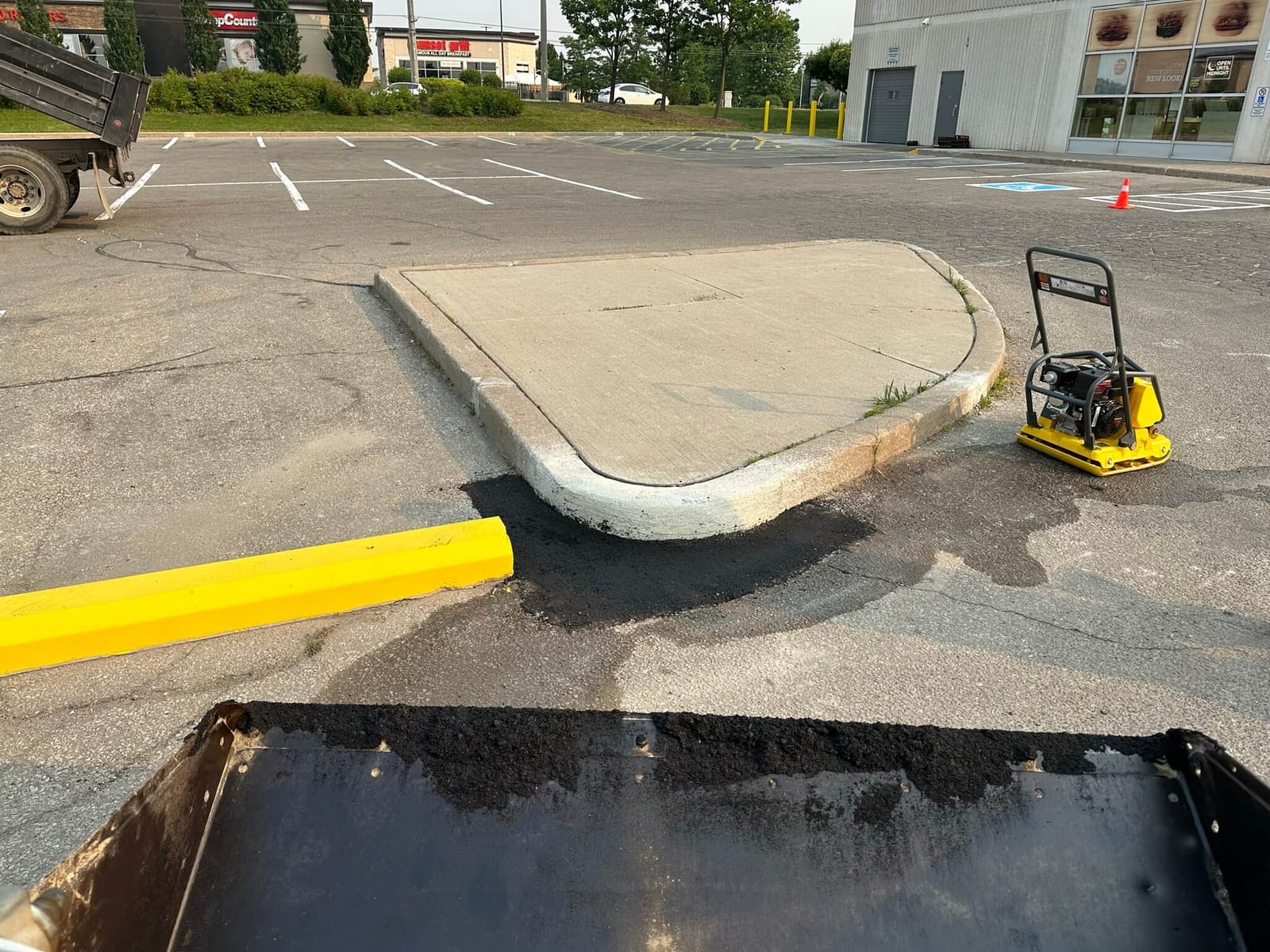
Alligator cracking and potholes in drive lanes are usually a sign of base failure. We cut out the bad area, excavate down to solid material, rebuild the stone base, compact it with a plate or roller, then install hot-mix asphalt in layers to match the existing thickness. This stops the problem from reappearing in the same spot after the next winter.
Long linear cracks across the lot often come from movement at old construction joints or from reflection cracks where old asphalt or concrete is underneath. These get cleaned, dried, and filled with a hot-pour crack sealant to keep water out of the base. On commercial lots that see salt in winter, sealing these cracks greatly slows down the formation of potholes.
Depressions where water ponds after rain are a major issue in Indianapolis because standing water finds every weak spot when it freezes. We identify ponding areas with a straightedge or by checking after a rain, then mill or sawcut the low section, adjust the base or add leveling courses, and pave to restore proper slope toward existing inlets.
Dumpster pads and loading areas behind restaurants, warehouses, and multi-tenant retail often fail first because of heavy trucks. These usually need full-depth replacement and often a concrete or thicker asphalt design. We explain the options and costs difference so you can choose what fits your tenant mix and truck traffic.
When to repair and when to replace your parking lot
Knowing when to stop patching and start planning a replacement can save you money. Precision Asphalt Indianapolis uses a practical rule of thumb based on condition, not just age.
If more than about 25 to 30 percent of the surface shows alligator cracking, repeated potholes, or prior small patches, you are usually at the point where large-scale patching and an asphalt overlay will be more cost-effective than yearly band-aid repairs. We see this a lot on older office parks and medical complexes built around the 1980s on the north side of Indianapolis.
A replacement or major rehabilitation project typically involves three main steps: correcting any drainage or base issues, installing full-depth patches where the foundation is bad, and then resurfacing or fully replacing the asphalt. On some lots with a decent base, we can mill off the top 1.5 to 2 inches of asphalt to remove ruts and surface defects, then pave a new surface course. This is common for retailers who cannot shut down for long and want a strong upgrade without rebuilding the whole lot.
If the base was never built correctly, which we see on some older industrial sites and infill retail, you may be better off budgeting for full-depth reconstruction. That means removing the existing asphalt, regrading and compacting the subgrade, installing the appropriate thickness of compacted aggregate base, then placing multiple asphalt lifts. It costs more up front, but the payoff is a longer life and less disruption for tenants later.
How parking lot replacement actually works from start to finish
Property managers and owners often know the finished look they want, but not the steps to get there. Precision Asphalt Indianapolis keeps the process straightforward and predictable so you can schedule around it.
On a typical Indianapolis commercial lot, we start by coordinating phasing with you so tenants and customers retain access. We often work in halves or thirds of the lot, and for 24 hour operations we can schedule night or weekend work where feasible.
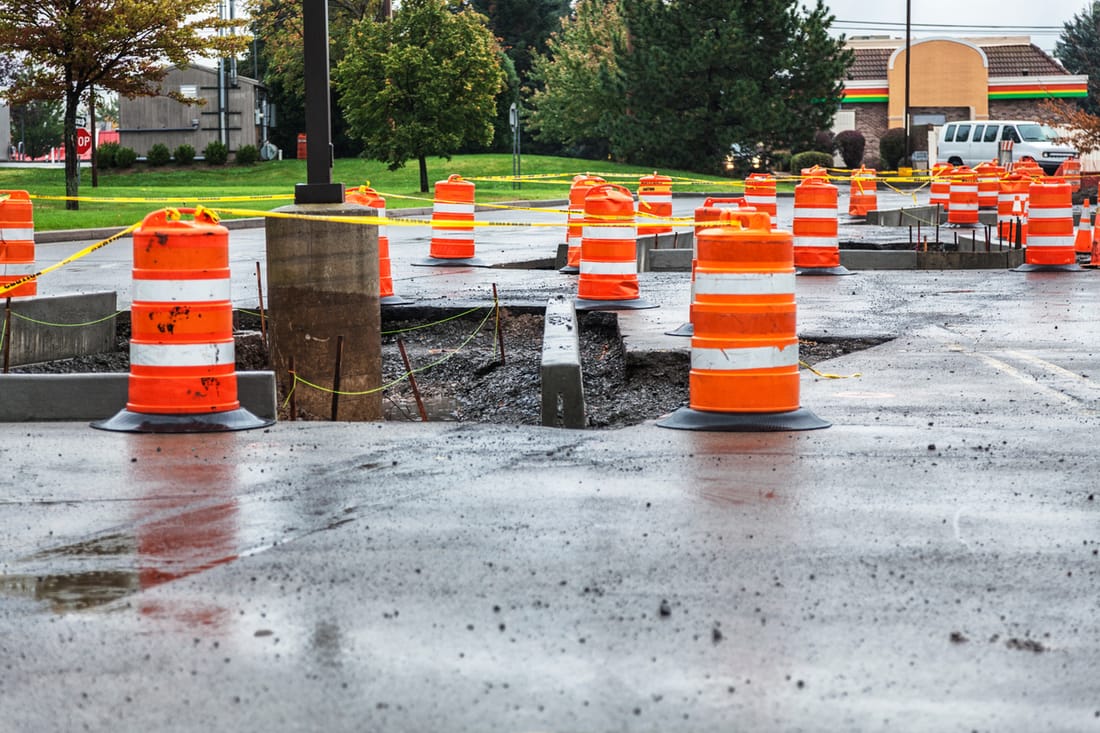
The existing surface gets milled or removed with skid steers, excavation equipment, and haul trucks. We then inspect the exposed base and subgrade. Soft areas are undercut and replaced with compacted stone. We check slopes toward catch basins and curb cuts, and if your lot has chronic drainage issues we fix grades at this stage rather than after the new asphalt is down.
Next comes rebuilding. We install and compact new aggregate base where needed, then pave in lifts. For commercial parking lots in Indianapolis, we usually use a base course along drive lanes and heavier traffic routes, and a surface course across the entire lot. Thickness varies by use. A small church or daycare lot might only need 3 inches total, while distribution and industrial users may need 5 to 7 inches or more in truck lanes.
After asphalt placement, we compact with vibratory rollers to achieve proper density. Joints are carefully tied into existing pavement or concrete aprons to avoid future cracking. Once the new surface cools, we complete line striping, ADA markings, signage installation, and any wheel stops or bollards. You receive guidance on cure time and when to allow cars and heavy trucks onto the new pavement.
Cost factors for parking lot repair in Indianapolis
Two lots with the same square footage can have very different costs, which is why Precision Asphalt Indianapolis breaks down the drivers of price on every quote.
Condition and base stability are the big ones. A lot that only needs crack sealing, a few full-depth patches, and a 1.5 inch overlay is far cheaper than one that requires removing the entire pavement and rebuilding the base. You will see separate line items for patching, milling, overlay thickness, and any undercutting so you know where your money is going.
Access and phasing also affect cost. If we can work in wide open areas with good truck access, production is faster and labor costs are lower. Tight sites in Broad Ripple or downtown with limited staging, or sites where we can only work in short night windows, take more time and can cost more per square foot.
Traffic type matters. Lots that handle semis, buses, or heavy delivery trucks need thicker sections and sometimes reinforced dumpster pads or concrete in specific areas. Domestic car traffic in a small professional office lot typically allows a lighter, less expensive design.
Finally, timing and coordination can save you money. Bundling crack seal, patching, and overlay in a single project is less expensive than spreading them over several years. We also help you prioritize, for example, addressing failing drive lanes and ADA access this year, then planning a full overlay in a later budget cycle.
What Indianapolis property owners should ask before hiring an asphalt contractor
Parking lot repair and replacement is a significant expense, and the cheapest bid is often the most expensive long term. Precision Asphalt Indianapolis encourages you to ask every contractor specific questions before you sign.
Ask how they evaluated your base condition. If a proposal recommends only a thin overlay on a severely cracked, alligatored lot, without any mention of full-depth patching, that is a red flag. Ask how thick the existing asphalt is and what they plan to do in obvious soft or pumping areas.
Request section thicknesses and materials in writing. A solid proposal will tell you where base course will be installed, how many inches of asphalt are planned, and whether any areas like dumpster pads or loading docks will get special treatment. For Indianapolis, it is typically not enough to say “overlay entire lot” without this detail.
Confirm how they plan to manage traffic and access during work. On retail and medical properties around Keystone at the Crossing or East Washington Street, poor traffic control can cost tenants business. You should see a basic phasing and traffic plan, even if it is simple.
Finally, ask about warranty and realistic life expectancy for the specific work being done. A properly designed and built replacement can often last 15 to 20 years in Indianapolis with regular maintenance. A patch and overlay on a marginal base may provide 7 to 10 years. Precision Asphalt Indianapolis explains these expectations so you can align the project with your long term plans for the property.